
Larger Than Life: 10 Guideposts for Young Men
an expanded letter

As you journey into becoming a man, God is going to be with you, and he’s going to bless you. Sometimes in our culture, it can be confusing to be a man: what does it mean to be a man? How can I be the good, God-given version of myself as a man without feeling like I need to be like every other man? These are tough questions. I don’t know the answer to all of those questions. I’m still figuring a lot out myself.
But I do think the essence of being a man is essentially this: men are people who know what they want, and they go get it.
Sometimes bad men want evil things and go get those things - that’s bad masculinity.
But good men want good things, and they go get those things - that’s good masculinity.
In the beginning Sir Arthur Conan Doyle’s book, “The Lost World” - a book about a man who goes on a journey to find a legendary, prehistoric jungle - the main character, Edward Malone, tells his friend Gladys that he’s in love with her. She tells him she could love him, but he’s not yet demonstrated that he’s the kind of man she’s looking for:
“Now tell me what’s amiss with me?” says Edward.
“I’m in love with somebody else,” said she.
It was my turn to jump out of my chair.
“It’s nobody in particular,” she explained, laughing at the expression of my face: “only an ideal. I’ve never met the kind of man I mean.”
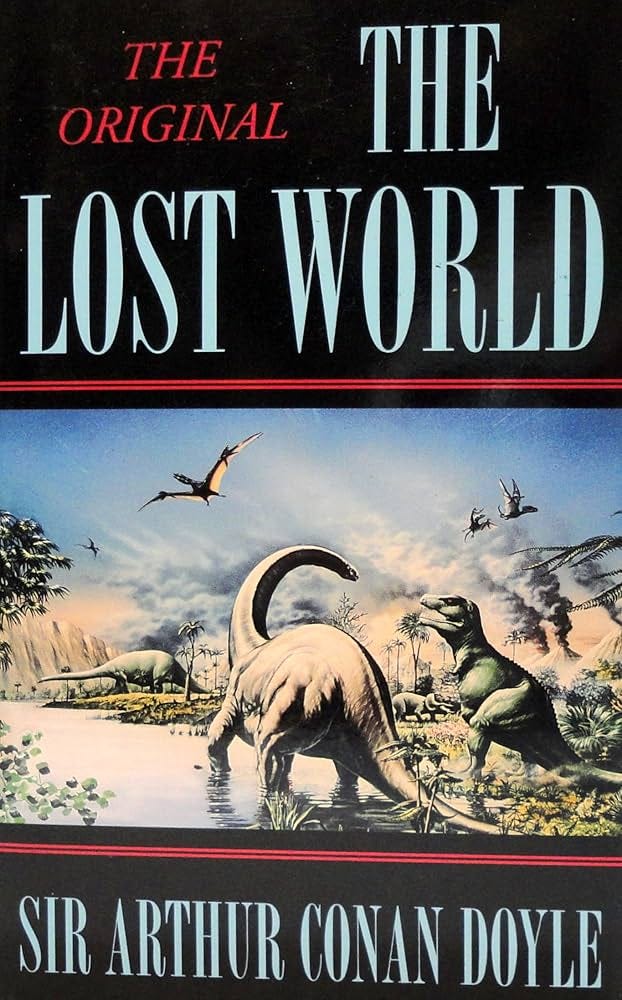
What’s this ideal man, she speaks of? Gladys tells Edward of great, adventurous men she’s read about, and then she gives him this curious definition of a man:
“It is the mark of the kind of man I mean that he makes his own chances. You can’t hold him back. I’ve never met him, and yet I seem to know him so well. There are heroisms all round us waiting to be done. It’s for men to do them, and for women to reserve their love as a reward for such men.”
I think you can hear it, can’t you? A man is someone, Gladys knows, who “makes his own chances. You can’t hold him back.” In other words: A man is someone who knows what they want, and they go and get what they want. This, she says, is the natural expression of being a man, a moment later: “You should do it because you can’t help yourself, because it’s natural to you, because the man in you is crying out for heroic expression.”
I’d encourage you to become a man who knows what he wants, and goes and gets it.
What does it mean to be a Good Man?
Notice I haven’t talked about what it means to be a good man. I’m just talking about what it means to be a man in general. And you’d be right if you thought, “Bad men are also people who know what they want, and they go get it.” You’re right.
This is why so many good men give up on being a man: they see bad men using their masculinity to take advantage of other people. So they become afraid of their masculinity. They back away from it, or try to stuff it down and apologize for it. Sometimes, in our culture, people will try to make you feel ashamed for what Gladys calls, “The man in you…crying out for heroic expression.”
But you will become depressed if you do tuck that away. And then you will become angry. And then you will become a bad man.
The fact is, God made you to be a man. That is part of your calling, your vocation.
The question isn’t whether you should be a man, but what kind of man should you be?
And the answer is: you should be a good man.
You should be a man who wants good things, and goes and gets them.
The ancient church father, St. Augustine, once said that the problem with us, deep inside, isn’t that we love things too much. It’s not that we want things too much. It’s that sin makes us love things that aren’t worth loving, and it keeps us from loving things that are worth our love. As Augustine said: “When we ask whether somebody is a good person, we are not asking what he believes or hopes for, but what he loves.”
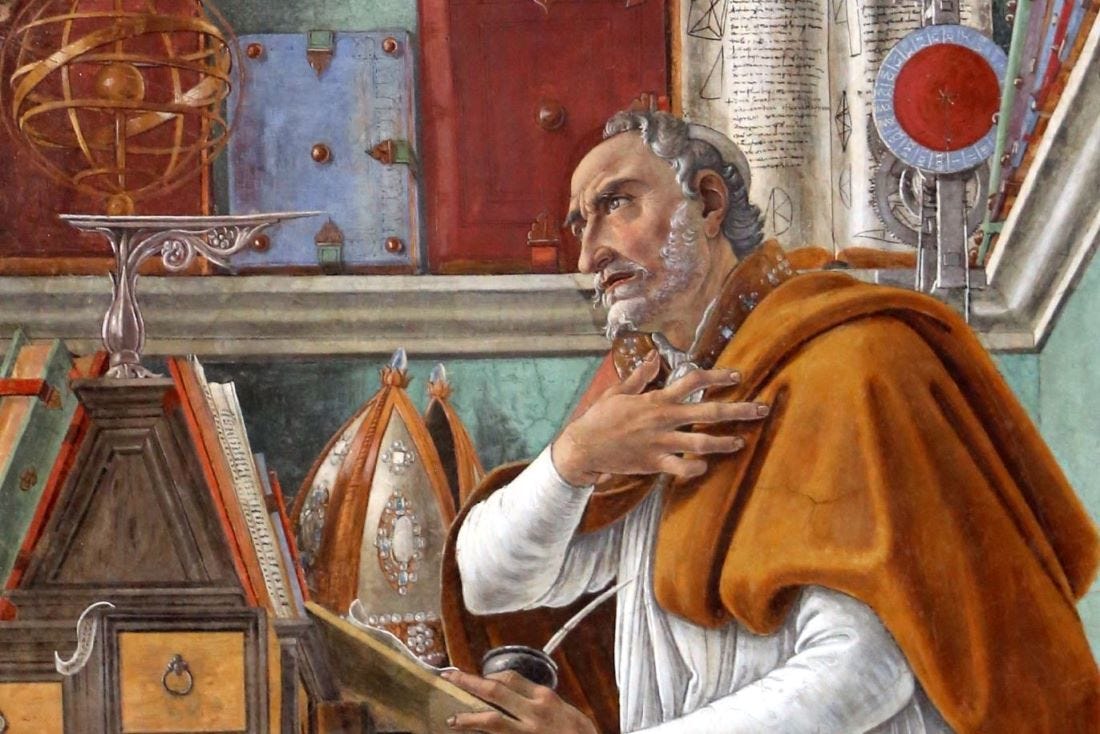
The problem with bad men isn’t that they want things and go get them. It’s that they love the wrong things, and use other people to get them. They have what St. Augustine calls a “disordered love”: “[A just person[ is also a person who has [rightly] ordered his love, so that he does not love what it is wrong to love, or fail to love what should be loved.”
A bad man loves, and goes after, selfish, destructive and shameful things. His masculinity is disordered by his disordered loves.
But a good man has “rightly ordered” loves: he loves, and goes after, what is most loveable. His loves are rightly ordered.
So I encourage you: be a man who knows what he wants, and goes and gets what he wants.
But I also encourage you: be a man who cultivates the love of good things in his heart, then goes and gets those good things.
Essential Masculinity
That’s my advice on being a man. I’ve spent a lot of years thinking about it. I think what I laid out above is the essence of being a man. Everything following this comes from that definition.
Some of the characteristics I’m going to outline below of being a man who “wants good things and gets good things” may not feel particularly masculine to you. You might say, “But women can have that characteristic too!” And you’re right!
But let me introduce an idea that I find helpful when we think about the definition of being a man or being a woman. This is an idea that comes from the philosopher Aristotle, who spent his whole life teaching us how to define things.
Aristotle said there are two kinds of characteristics anything can have: essential characteristics, and accidental characteristics.
So, I’m not trying to be crude, but to simplify this, we could say: a man’s body essentially has a penis. That is essential to what it means to be a man. A man’s body also has lots of other features: he has brown eyes. Women have brown eyes, too. He has hair on his legs. Women do too! But those are “accidental features” - a man can have brown eyes, and a women can have hair on her legs, but that’s not what makes him a man or her a woman.
So although a woman can want things and go and get them, that’s not the essence of what it means to be a woman. It is the essence of what it means to be a man. Some women are go-getters, and some are not, but these are “accidental” feature of womanhood. There’s nothing wrong at all with woman who have many of the characteristics I’m going to outline below. But these characteristics aren’t essential for a woman to be a woman. They are the essential characteristics of being a man.
Living Larger Than Life
Here is one way we see how this characteristic is essential to being a man: think of the phrase, “larger than life”. Maybe you’ve heard a certain man described as someone who is “larger than life”. Do you know anyone like that? A man who is “larger than life”? Maybe you’ve read about him in a fiction book, or in a history book, or heard stories about him from your parents. What do we mean when we describe a man as “larger than life?” Well, I think almost always, we mean that he’s a man who wants big things, and he gets them. He’s a Dreamer. An Adventurer. He lives a life that’s bigger than him. He seems to have no fear. The line from his desires and his actions is thin, if there’s any at all. He could almost be described as wild.
One of my favorite stories is a story called “Big Fish”, about, believe it or not, another young man named Edward. Edward isn’t rich, and he’s not a huge hulk of a man. But I always remember watching this movie, and wanting to be like Edward. To me, he was what it meant to be a man.
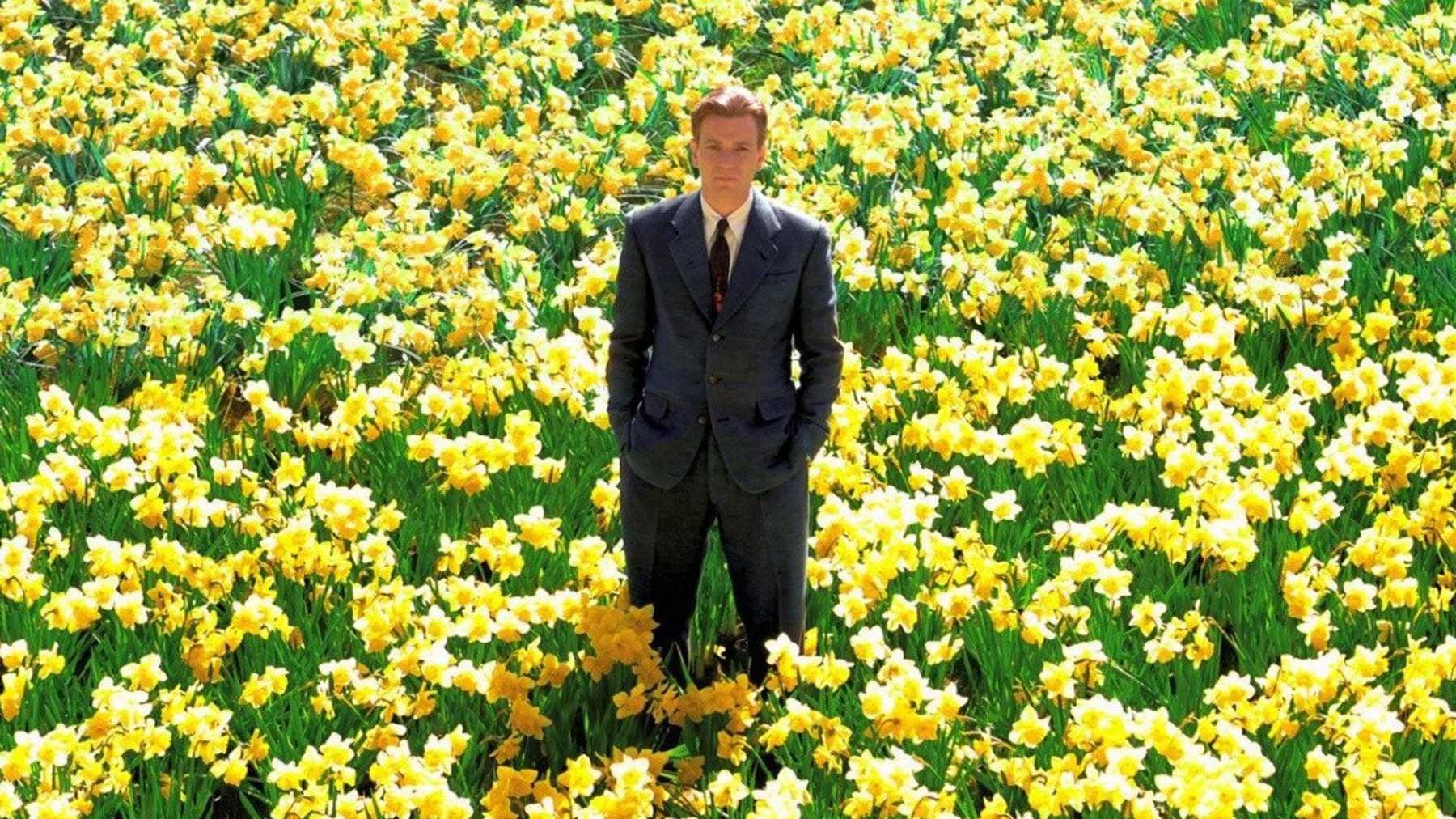
What was it about Edward that was so compelling to me?
Well, although Edward isn’t often the strongest or smartest person, he’s determined. Throughout the film, we see Edward wanting things - good things - and going to get them, for himself and others. At the beginning of the film, Edward’s village is under threat of a giant named Karl. Karl is eating all the sheep. Edward wants to stop the giant, so he bravely leaves town and confronts the giant.
Everyone else wanted to get rid of the giant, but Edward was being a man: he wanted it bad enough to go and get it, even to risk his life for it. So he negotiates with the giant, discussing their mutual interests.
Edward later comes across a sleepy little village that’s fallen into disrepair. He has a vision for what it once was, so he recruits the town to raise funds, work together, and restore the town to its original beauty. Everyone wished for that. But Edward wanted it, and he went and got it. He is being a man.
Notice in both cases, Edward wants something good not just for himself, but for his whole community. He sees problems in his community, and as a man, he resolves to fix them. That’s a good man. He’s not going to get things only for himself, but for all of us.
But of course, he wants these things too. And so we’re not surprised when Edward falls in love with the beautiful Sandra at the circus - so much so that the circus seems to freeze in place as he walks toward her (but time makes up for it by speeding up after, which unfortunately for Edward means she scurries away so fast he can’t possibly catch her). He decides, on the spot, that despite the fact that Sandra’s engaged, and out of his league, and that it will take him years of “indentured servitude” to learn her first name, she’s worth it. He wants her, and he’s going to get her. So he spends years as a circus slave to learn one small fact about her each year, until at last, he has everything he needs to go and get her.
To me, Edward Bloom is a man who lived a life that was “larger than life”. And that is the kind of man I want to be. Not the smartest. Not the strongest. Just the man who wants good things, and gets them. Not just things for me. Things that are for my community. Not just a man, but a good man. That’s what it means to live a life that’s larger than life.
Personally, I’ve never heard a woman described as someone “larger than life”. Why is that? It’s because I don’t know any women who would even feel complimented by such a description, because we all know, deep down, that this is a description of masculinity. I know plenty of men who would love to live a life that could be described as “larger than life”.
Why?
It’s because, I think, this is a description of the essence of being a man: a man wants things, and goes and gets them. He becomes larger than his own life, because he wants things that are bigger than him, and despite all the odds, he goes and gets them.
This is why I say the essential characteristic of masculinity is that you know what you want, and you go and get what you want.
Does a Man Always Get What He Wants?
You might think I’m describing someone who is spoiled when I say, “a man knows what he wants and gets it.” We don’t like children who know what they want and get it. So why would we want men who do?
But I don’t mean that men always get what they want, in the end. I mean masculinity has a determined nature to it. Good men are fixated on what they want. And usually, they know full-well that they could fail. If they do, it doesn’t make them less of a man. In fact, just the opposite: a man who dies for what he wants - maybe especially that man - is certainly a man who lived a life that was “larger than life”. You see? To be a man who knows what he wants, and goes and gets it, doesn’t mean a true man always has what he wants. But he would die before he gave up on his principles.
This is at least part of the reason why Jesus must come to us as a man: God wanted something - the salvation of his people - and he wanted it so badly that he died for it. That’s an essentially masculine task. Jesus lived a life that was “larger than life” - he knew just what he wanted, and he fixed his eyes on it. In the end, he laid down his life for it. That’s why, although Jesus didn’t have all the things we’re impressed by in other men - money, power, women, political position - he was still far more masculine than all of the silly men who collect toys to “prove” they’re men. He wanted something desperately, and he saw it through.
Jesus knew what he wanted - the salvation of his people. And he wanted it so badly, he died for it.
That is a true, ultimately good man.
Practical Advice
Below is a sketch of the “recipe” for being a man who wants good things, and goes and gets them. All of these things you’ll have to learn through trial and error, some you’ll learn through prayer and scripture, some you’ll learn from men who’ve gone before. You should talk with the good men in your life about how they see these things in you, and where you can grow.
It would be worth, someday, writing more about all of these.
For now, here is a sketch:
1. Intentionality - Don’t let a day happen to you. Happen to a day. Be intentional.
2. Hard Work - You can have anything you want, so long as you’re willing to pay for it. Life is easier when you work really hard.
3. Curiosity - The world is an awesome place. Go explore everything about it that interests you. Nothing is boring. Bored people are boring.
4. Grit - So often, the people who become successful are the people who just keep failing their way forward. Keep going, and eventually, you’ll win.
5. Spirituality - Don’t be a shallow man. Have a rich and deep prayer life with God. Everything will feel dissatisfying if you don’t. This is how you cultivate the love of the good in your life.
6. Risk-taking - You only live once. Take a risk for things that matter (and don’t take a risk if it doesn’t). Risk rejection. Anything worth doing is worth getting rejected over.
7. Sobriety - The most common way to avoid your task as a man is to become intoxicated: with sex/fantasy/pornography. With drugs/alcohol. With your phone/entertainment. That’s opting out of everything above. Stay engaged. Stay sober.
8. Friendship - It’s a lie our culture tells us that men are people without friends. Form deep friendships and you’ll be a full person. Men can’t become men by themselves. They need to be part of a brotherhood.
9. Responsibility - Be willing to take responsibility for everything in your life. Even when the deck is stacked against you, own it. Own everything. Don’t make excuses, even when those excuses are legitimate. Focus on your part.
10. Sacrifice - The greatest trait of a man is that he’s willing to lay down his life for others. Women aren’t commanded to lay down their lives for men. Men are commanded to lay down their lives for women. Be willing to lay aside the things you want for the people around you. That’s what Jesus did for you, as the ultimate picture of masculinity.
So much more to say, man. But pursue those things, and I don’t think you can go wrong. Praying for you now.
Nicholas
A note to readers: You’ll continue to receive my “notes for the weekend” through the summer, but it’s generally the time of year where I try to finish up my big writing projects, so you won’t be receiving essays/long form articles from me until the beginning of September. Feel free to reach out in the meantime.
Good list of qualities! I also turn to the New Testament description of qualifications for elders and deacons, as found in 1 Tim 3:8-13, and Titus 1:5-9, e.g.: dignified, not double-tongued, not addicted to much wine, not greedy for dishonest gain, sound in faith and life, blameless, Godly wife, one-woman man, spiritual leader of the family, not arrogant or quick-tempered, hospitable, a lover of good, self-controlled, upright, holy, disciplined, etc.
Holy buckets, Nicholas. Astoundingly perceptive and medicinal writing. There is something so liberating and unlocking when reading truth like this. I’m forwarding this to some of the boys.